

Request More Information

Email:  WhatsApp:

koenig-logo

Oracle Database With SQL

17 Mar 2026   05:30 AM CST

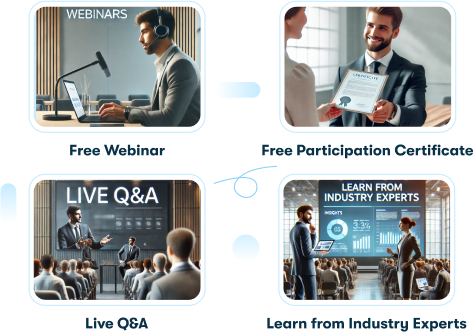
  • Free Webinar
  • Live Q&A
  • Free Participation Certificate
  • Learn from Industry Experts

Learn More About This Topic

Webinar Overview
Oracle SQL (Structured Query Language) is the standard language used to store, manage, and retrieve data in Oracle databases. It allows users to create and modify database structures such as tables, views, and indexes, as well as insert, update, delete, and query data. With SQL commands like SELECT, INSERT, UPDATE, and DELETE, users can easily interact with data, while constraints such as primary keys and foreign keys help maintain data accuracy and integrity. Oracle SQL also supports joins to combine data from multiple tables, functions for calculations and formatting, and transactions using COMMIT and ROLLBACK to ensure data consistency. It forms the foundation for PL/SQL, Oracle’s procedural extension that adds programming logic and automation to SQL operations.
Key Points

  • Oracle SQL is used to store, retrieve, and manage data in Oracle databases.
  • It uses commands like SELECT, INSERT, UPDATE, and DELETE for data operations.
  • DDL (Data Definition Language) commands such as CREATE, ALTER, and DROP define and modify structures.
  • Constraints like PRIMARY KEY, FOREIGN KEY, and UNIQUE maintain data integrity.
  • Joins combine data from multiple tables based on related columns.
Meet The Trainer
Naveen Kumar  Rukkanna
Naveen Kumar Rukkanna

An experienced Oracle consultant and corporate trainer with over 10 years in the field, I possess expertise in Oracle Prod/Dev/UAT DBA support, management of database objects, performance tuning, and troubleshooting. I have hands-on skills in Oracle SQL, PL/SQL, and related utilities, complemented by strong communication and analytical abilities.

Register for the Webinar
Registration successful!
Details have been shared over email.
Explore More Webinars
Stop Clicking In AWS - Full Infrastructure as Code Automation With Terraform
Show More

Webinar Summary:

Are you still creating EC2 instances, VPCs, and security groups manually through the AWS Console? In this webinar, we’ll explore how Infrastructure as Code (IaC) tools like Terraform can replace repetitive manual cloud operations with automated, version-controlled, and reusable configurations. Learn how modern DevOps teams provision entire cloud environments in minutes using code — reducing errors, improving consistency, and scaling faster. If you want to move from “clicking engineer” to “automation engineer,” this session is for you.

17 Mar 2026 | 01:30 AM CST   1 Hour

Oracle Database With SQL
Show More

Webinar Summary:

Oracle SQL (Structured Query Language) is the standard language used to store, manage, and retrieve data in Oracle databases. It allows users to create and modify database structures such as tables, views, and indexes, as well as insert, update, delete, and query data. With SQL commands like SELECT, INSERT, UPDATE, and DELETE, users can easily interact with data, while constraints such as primary keys and foreign keys help maintain data accuracy and integrity. Oracle SQL also supports joins to combine data from multiple tables, functions for calculations and formatting, and transactions using COMMIT and ROLLBACK to ensure data consistency. It forms the foundation for PL/SQL, Oracle’s procedural extension that adds programming logic and automation to SQL operations.


17 Mar 2026 | 05:30 AM CST   1 Hour

AWS Discovery Day - Cloud Practitioner Essentials
Show More

Webinar Summary:

Moving from a "buy and maintain" hardware model to an "on-demand" service model. Comparison between Public Cloud (AWS), On-Premises (Private Cloud), and Hybrid setups. Physical locations around the world (e.g., us-east-1) containing multiple Availability Zones. One or more discrete data centers with redundant power and networking. Used by Amazon CloudFront to deliver content to users with the lowest possible latency.
 

17 Mar 2026 | 09:30 AM CST   1 Hour

Explore Related Courses

Oracle Database 19c: New Features for Administrators Ed 1